In a recently published decision by the Michigan Court of Appeals, Davina Grady v MEEMIC Ins Co, ___ Mich App ___ ; ___ NW2d ___ (2021), the majority cemented last year’s decision in Sterling Heights Pain Management, PLC v Farm Bureau General Insurance Company of Michigan, ___ Mich App ___ ; ___ NW2d ___ (2020), holding that only the Michigan Attorney General has statutory standing to challenge the propriety of a Professional Limited Liability Company’s formation, relying also upon Miller v Allstate, 275 Mich App 649; 739 NW2d 675 (2007).
In Grady, the trial court agreed with MEEMIC that the services provided to Grady by Mercyland Health Services, PLLC, were unlawfully rendered because Mercyland’s sole member and manager, Dr. Mohammed Abraham, was not licensed to practice medicine in Michigan. MEEMIC argued the lack of licensure was a violation of the Michigan Limited Liability Company Act (MLLCA), MCL 450.4104(2), which requires all members and managers of a PLLC offering certain professional services to be licensed to render the same professional services. The Court of Appeals, however, reversed the trial court’s decision, focusing on the question of standing rather than licensing. The Court found that only the Attorney General has statutory standing—which is more limited than constitutional standing—to challenge a PLLC’s corporate formation. Miller v Allstate, 275 Mich App 649; 739 NW2d 675 (2007). The Court noted that the Business Corporations Act (BCA) at issue in Miller includes a provision identical to the one in the MLLCA, which expressly grants statutory standing to challenge a corporation’s formation solely to the Attorney General. The Court further noted that the individuals who provided treatment to Grady were properly licensed.
The Court concluded that because MEEMIC lacks standing to challenge Mercyland’s alleged improper formation, it would be improper for the Court to consider whether the alleged violation of the MLLCA rendered Mercyland’s treatment to Grady unlawful.
The dissent found the question before the Court to be one of licensing, not standing, such that the Miller and Sterling Heights cases did not apply. The dissent highlighted the relevance of MCL 450.4904(2) which created an additional licensing requirement that was not at issue in those cases, and noted that MEEMIC was not challenging Mercyland’s status as a PLLC, but rather whether the members of Mercyland were licensed to provide services under the public health code. The dissent also relied upon The Healing Place v Allstate Ins Co, 277 Mich App 51; 277 NW2d 51 (2007), which held that services are not compensable if they are not legally rendered. The Healing Place Court found a facility was required to be licensed and, because it was not, services provided by the facility were not legally rendered. The dissent in this case found the same principle applies: where licensure is required, a lack of such licensure renders the service not legally rendered, whether the licensure is of a facility or a member/manager of a PLLC. In this case, Dr. Mohammed Abraham was not licensed to practice medicine in Michigan and therefore, the services provided by Mercyland were not lawfully rendered and could not be subject to reimbursement under the no fault act.
Check out our News & Events page to see what’s happening at GLM and find out about our upcoming seminars.
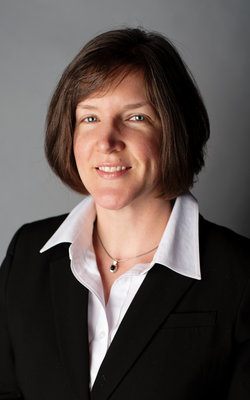
Sarah Nadeau, Editor of The Garan Report Publication, is a Shareholder in our Detroit Office. Sarah can be reached at 313.446.1530 or snadeau@garanlucow.com